
TERRA-PETRA OIL WELL DUE DILIGENCE SERVICES

Terra-Petra’s Oil Well Due Diligence service utilizes a proven systematic process that is highly accurate in locating oil wells in the field. We maintain a high degree of confidence that we will be able to locate any oil well that is believed to be on your property.

If we can’t find it, it probably means that it isn’t actually on your property (which is actually more common than you might think).

Oil Well Due Diligence May Include any of the following:

Frequently Asked Questions

How Deep are oil wells buried?

Typically, between 5-10’ below grade.

How Deep Can You Locate an Oil Well?

Routinely as deep as 20 feet (and sometimes deeper). The Magnetometers we employ can typically locate an abandoned oil well to depths of over 20 feet providing that background noise levels are not too high and the well casing is not significantly corroded.

How Accurate are the Oil Well Maps?

We like to say they are historically inaccurate. The maps that are readily available to the public provide a general location of oil wells and Terra-Petra utilizes them as a guideline. However, it is important to know that most of the online maps were created by overlaying Google Maps over a scanned in hard copy map. Which didn’t always match up perfectly. Oil wells were plotted based on these overlays. Additionally, the well casings themselves are anywhere from 12-24 inches in diameter and the scale of the symbols used to identify them can be as large as 50’ in diameter.

What if you don’t find the oil well on my property?

As long as you have made a “due diligent” effort to locate the well and you can’t find it then you work is completed. CalGEM considers the following to be a due diligent effort complete a Geophysical Survey and uncover any metallic anomalies. Uncovering the anomaly consists of excavating a 15 foot by 15 foot area to a depth of 12 feet. If the Geophysical survey doesn’t identify any anomalies, then excavating in the area as illustrated on the map will suffice.

How deep do you have to excavate before you have to stop?

12 feet deep.

CalGEM Construction Site Plan Review:

The Agency issuing the Building Permit will require that the Construction Site Plan Review process be completed with CALGEM prior to issuing any building permits for the proposed development. Upon completion of the Construction Site Plan Review process, CALGEM will issue a Well Review letter to the Building Plan Checker assigned to the development describing their recommendations for handling any known oil wells on the site. It will be up the permitting agency as to how they want to enforce the recommendations.

Terra-Petra shall prepare an Oil Well Construction Site Plan Review (CSWR) application package in accordance with CalGEM standards and submit in digital form via email to CalGEM.

Terra-Petra shall prepare the Construction Site Plan Review which shall include the following:

  1. A completed and signed Construction Site Plan Review application form
  2. Electronic file of the proposed site plan, with correct scale and dimensions, including any foundation details. The site plan must show any wells mapped on the property
  3. An Assessors/Tract Map showing street names, lot dimensions and lot numbers for the property
  4. A description of the project.
  5. A list of all wells mapped on your property (operator, well name, and API number). Wells will be researched through Wellfinder.
  6. Casing diagrams for all mapped wells on your property (if well files are available online)
  7. Account for at least two virtual meetings with CALGEM
  8. CALGEM issues the letter of approval for the CSWR which will then be submitted to the appropriate Building Department.

Scope of Work for Geophysical Survey:

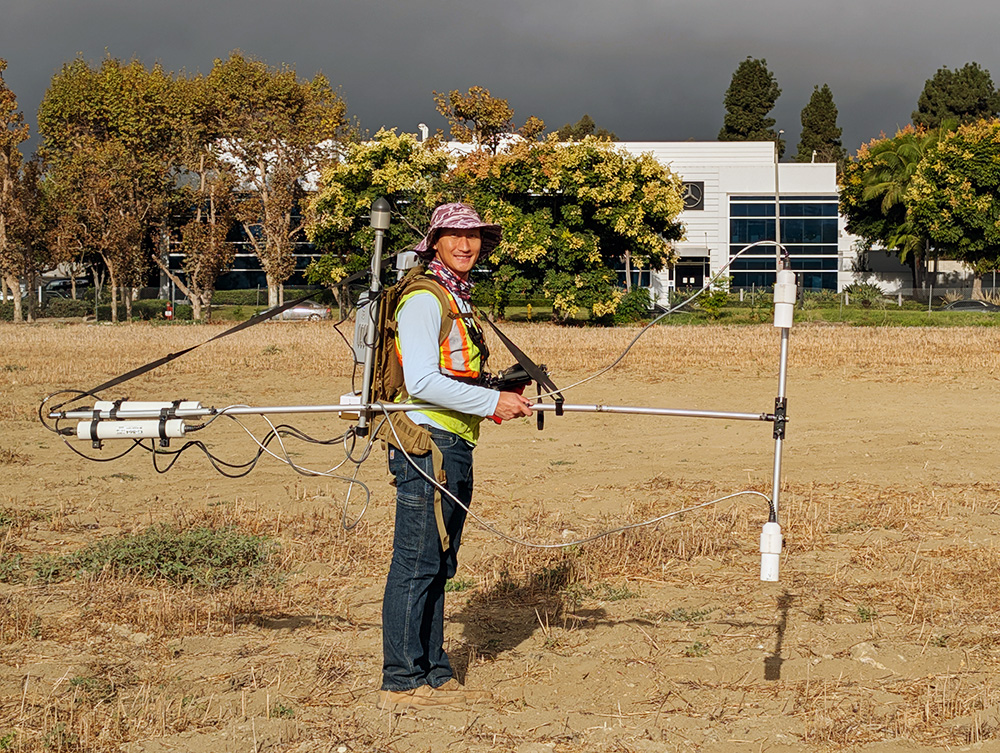
The primary geophysical instruments used during this investigation will consist of a Geometrics G858 cesium magnetometer (G858) and, if necessary, a Geonics EM-61 digital metal detector (EM-61). The different methods complement each other as they each respond to different physical properties of subsurface materials, and have different depths of investigation and resolution. Additionally, the methods have complementary strengths and limitations. These methods are summarized in the attached technical note.

The G858 measures the intensity of the magnetic field of the earth. Steel cased, abandoned oil wells generally give rise to very high amplitude and broad magnetic anomalies, and can be located using a magnetometer. A typical magnetic response over an abandoned oil well is included in the attached technical note. The magnetometer can also locate other buried metallic objects such as drums and pipes. The EM-61 is a high sensitivity, time-domain, digital metal detector which is often used to detect both ferrous and non-ferrous metallic objects. It is designed specifically to locate buried metallic objects such as drums, tanks, pipes, UXO and metallic debris. The EM-61 may be used to assist in distinguishing existing pipelines from possible magnetic oil well anomalies

When first arriving on the site, the G858 will be programmed to operate in search mode. An attempt will then be made to locate the well without making measurements along a grid. If the well is located in this manner, the location will be marked using a wooden stake or surveyors marking paint, plotted on a hand-drawn site map and the location recorded with a submeter GPS system. This would not include a report of our findings, as no data will be acquired. To locate the oil well in this manner, we assume that the expected location will still be staked prior to the site visit and the surface free of other metallic objects.

If the well cannot be found using search mode, magnetic and EM data will be acquired along rectangular grid within a maximum 200- by 200-foot area. A 10- by 10-foot grid will be marked within the survey area using surveyors marking paint/chalk to provide spatial control for the geophysical survey. Alternatively, the instruments can be coupled to a submeter GPS system, which will provide spatial control. Magnetic and EM data will be stored in internal memory or a digital data logger, along with line and station locations or GPS data, and downloaded to a laptop computer after completion of the survey.

Oil Well Safety Evaluation Report:

If the abandoned well is located during the field investigation, then a formal report may not be required. The approximate well location will be staked in the field and documented using a submeter GPS system. Tabulated well coordinates will be provided to the client. However, in the unlikely event that the abandoned well cannot be located (locations of record are in error by more than 75 ft, well casing was pulled, etc.) then an optional report summarizing the results of the geophysical survey conducted to locate the well will be provided within two weeks of completing the geophysical survey. The report will include a color-enhanced contour map of the magnetic data.

Excavate Well Head:

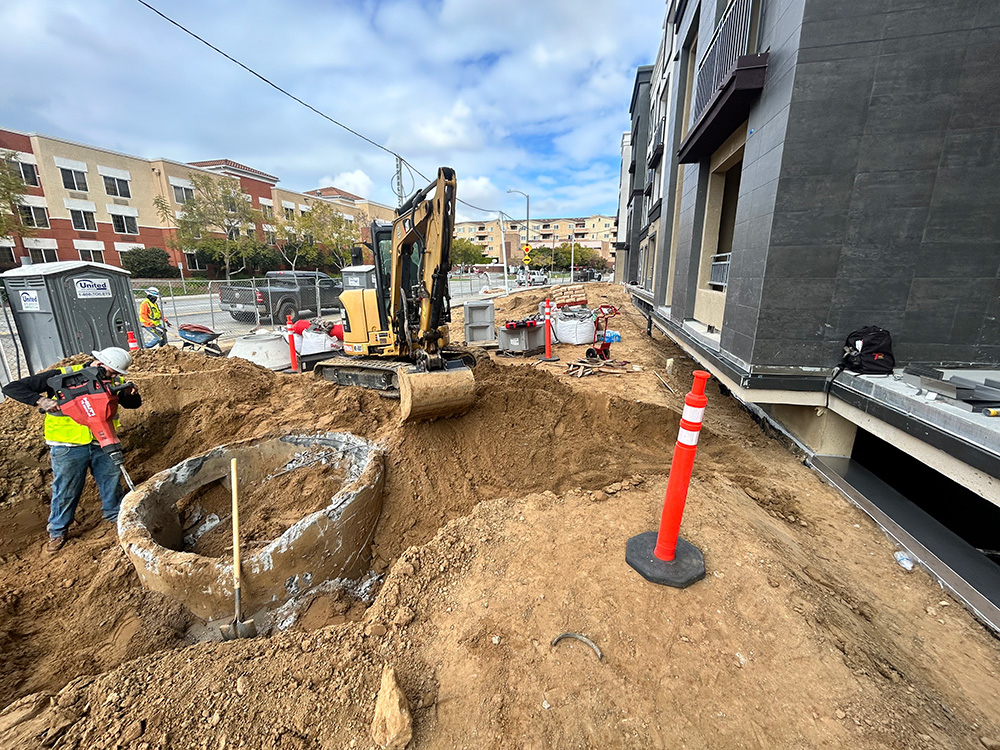
Provide a backhoe and operator to uncover and locate the oil well. Size of excavation is limited to depth of 12’ from existing grade, sides to besloped for safe entry into excavation. Work will be performed under the company’s existing AQMD various locations permit.

Terra-Petra shall backfill excavation with loose soil after locating and surveying the well heads. Terra-Petra will be responsible for notifying CalGEM and any other appropriate agency prior to conducting any Oil Well Leak Testing activities. We shall coordinate with these agencies to ensure that all responsible parties are onsite during the Sniff Testing activities. We assume the backhoe work can be completed in a single day. We also assume tha the move in and move out will be the same day as the backhoe work. There will be additional charges if the work exceeds the one day.

Leak Test Well Head:

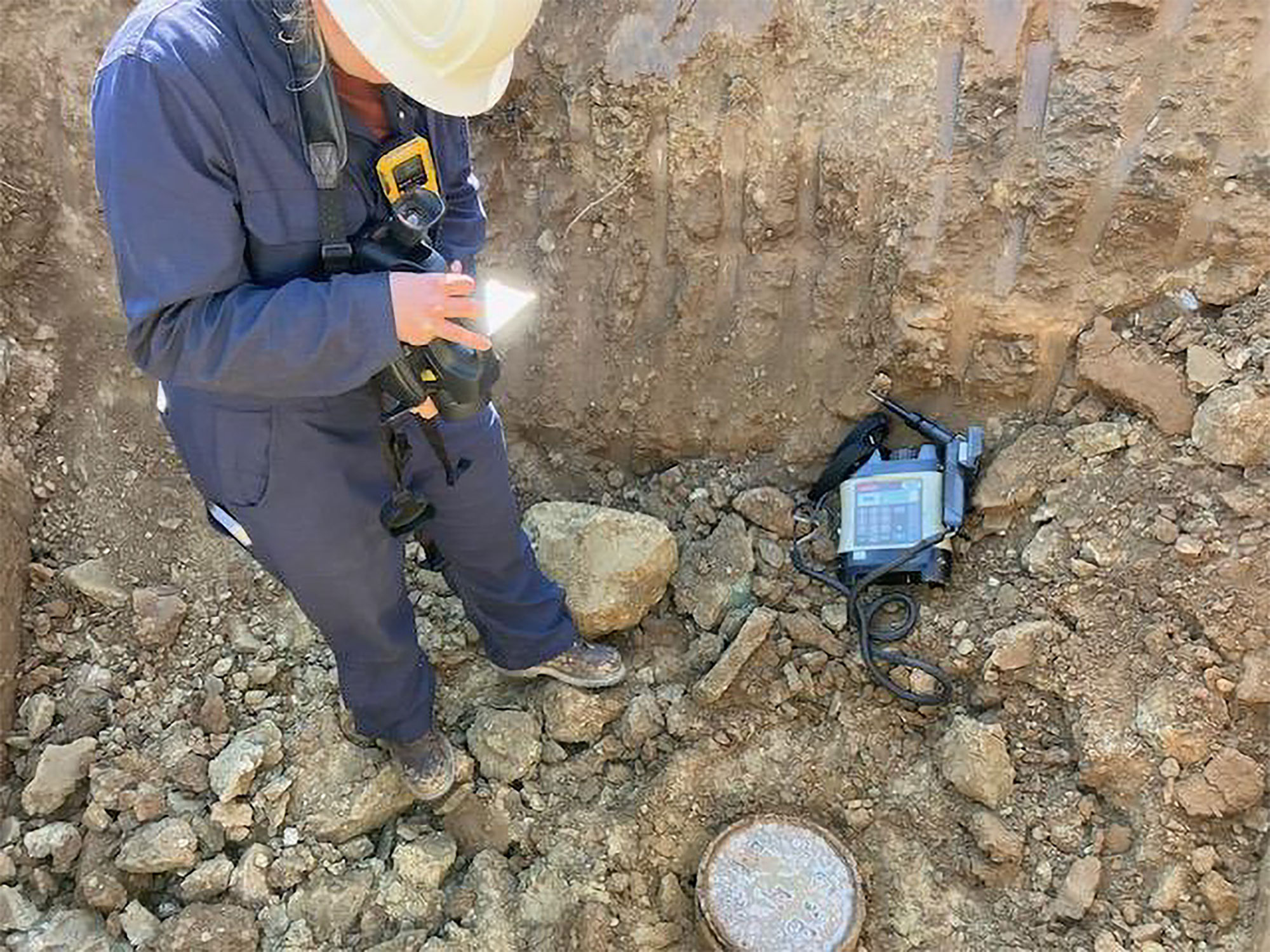
Once the well head has been uncovered/exposed and made accessible for safe entry Terra-Petra shall conduct Leak Testing at the casing. Monitoring at subject oil/gas well casing for combustible gas using a portable battery-operated HeathTech Detecto-Pak III flame-ionization detector (FID) or equivalent and record all readings in an approved format. The combustible gas monitoring equipment must be capable of detecting combustible gas concentrations with lower detection limit of approximately 10 parts per million by volume (ppmv) by Terra-Petra.

Monitoring at subject oil/gas well casing using a portable battery-operated Jerome 631-X hydrogen sulfide analyzer (or equivalent) and record allreadings in an approved format. The hydrogen sulfide monitoring equipment must be capable of detecting hydrogen sulfide gas concentrations with lower detection limit of approximately 1 ppmv by Terra-Petra.

We perform casing and wellhead integrity testing to verify structural soundness and identify potential gas migration pathways. Testing may include fluid-based pressure testing and surface monitoring to confirm compliance and environmental protection standards.

Preparation of summary report signed by California Registered Professional Engineer (Civil) by Terra-Petra and submitted to the client to be shared with the responsible oversight agency (Los Angeles Fire Department and/or CALGEM). The report shall summarize all of our activities completed for the project including a copy of the geophysical survey, results of the Sniff Testing and a map illustrating the location of the wells based on the survey.

Survey Well Head:

Surveying well head location: Terra-Petra shall obtain copies of record data maps (i.e.: Tract Maps, Parcel Maps and Records of Survey), Corner Records, Centerline Tie Notes and Benchmarks with the County of Los Angeles.

We shall obtain ground specific field locations and elevations within the defined mapping limits. Said areas shall include centerline monuments toestablish parcel Right of Way, Location of Oil Well in question, NAD 83 latitudes and longtitudes to an accuracy of 6 decimal places, elevation of top of well in NAVD 88. Terra-Petra will provide an exhibit showing the adjacent roads, the parcel in question, and the well located within said parcel, and any other pertinent data. All surveying work will be in compliance with CALGEM requirements.